Living near a tropical beach is one of the most coveted residential experiences available anywhere in the world — a daily life whose backdrop of warm sea breezes, the sound of waves, the quality of light on water, and the particular unhurried pace that coastal tropical living naturally encourages is genuinely unlike any other domestic environment on earth. Yet the home that fails to embrace and respond to this extraordinary setting — that is designed and furnished as though it could be anywhere rather than specifically and intentionally where it is — represents a significant missed opportunity whose consequences are felt in every hour spent inside a space that neither connects with nor celebrates the remarkable environment just beyond its walls. The best tropical beach house designs are those that treat the natural environment as the primary design inspiration and the most important collaborator in the creation of a domestic space whose every element — the materials, the palette, the spatial organisation, the ventilation strategy, and the relationship between indoor and outdoor living — reflects and responds to the specific conditions of coastal tropical life with intelligence, sensitivity, and genuine aesthetic ambition. Whether the home is a compact beachfront bungalow, a generous family house set back from the shore, or a contemporary villa whose architecture makes bold statements about the possibilities of tropical residential design, the design principles that create genuinely welcoming, genuinely comfortable, and genuinely beautiful tropical beach homes are consistent and learnable. This guide covers every major dimension of tropical beach house design with the practical depth and honest assessments that genuinely useful guidance requires.
Working With Natural Light and Tropical Ventilation
The most fundamental and most consequential design decisions in any tropical beach house are those that determine how the building manages the two most abundant and most powerful natural forces of its environment — sunlight and wind. Get these decisions right and the house is naturally cool, naturally bright, and naturally comfortable without the energy cost and mechanical complexity of air conditioning systems whose noise, environmental impact, and tendency to seal the interior from the natural environment they are compensating for represent a significant compromise of the tropical living experience at its most genuinely pleasurable. Get them wrong and the house is either a sweltering box that requires constant mechanical cooling to be habitable, or a dark, closed space whose relationship with its extraordinary surroundings is one of exclusion rather than celebration.
Cross-ventilation — the movement of air through the house driven by pressure differences between windward and leeward facades — is the foundational passive cooling strategy of tropical architecture and the principle whose intelligent application in a well-designed beach house makes it genuinely comfortable in warm weather without any mechanical assistance. Achieving effective cross-ventilation requires that the house plan provides clear air pathways between openings on opposite or adjacent facades — openings whose size, position, and type are designed to capture the prevailing sea breeze at the windward facade and allow it to flow through the interior before exiting at the leeward side. High-level openings — clerestory windows, louvred roof vents, and open ridges in traditional tropical roof forms — are particularly effective for releasing the hot air that accumulates near the ceiling by convection, creating a continuous upward movement of air whose combination with horizontal cross-ventilation through lower-level openings produces the kind of natural air movement that makes a well-designed tropical house feel cooler than its ambient temperature would suggest.
Shading is the equally important complement to ventilation in the tropical climate management strategy — the strategy that prevents the solar heat gain that makes ventilation insufficient on its own by intercepting direct sunlight before it reaches the building envelope. Wide, overhanging roof eaves — the single most characteristic and most functionally important element of traditional tropical architecture across the full range of regional vernacular traditions — shade the walls and windows of the house from the high-angle tropical sun while allowing the lower-angle light of morning and evening to enter the interior and the views of the surrounding landscape to remain unobstructed. The depth of overhangs required to provide adequate shading at different latitudes and different facade orientations is a straightforward geometric calculation whose results are more generous than many contemporary designers initially intend — one to two metres of overhang is typically required for effective south-facing shading in a tropical location, and the visual boldness of generous eaves is one of the most characteristic and most appealing qualities of the tropical residential architecture that manages its climate most successfully.
Materials and Finishes That Celebrate the Coastal Setting
The materials from which a tropical beach house is built and finished are the physical expression of its relationship with its environment — the tangible dimension of the design philosophy whose honest, appropriate, and aesthetically intelligent selection produces interiors and exteriors that feel genuinely of their place rather than imported from a different climate, a different cultural context, or a different aesthetic tradition whose conventions have been applied without the sensitivity to setting that genuinely great residential design requires. The most beautiful and most enduringly satisfying tropical beach house interiors are those whose material palette draws primarily from the natural world of the coastal tropical environment — its woods, its stones, its fibres, and its earthy mineral pigments — and whose response to the light, humidity, and salt air of the tropical coast reflects both the practical requirements of coastal durability and the aesthetic opportunities that these extraordinary natural conditions create.
Timber is the defining interior material of tropical beach house design and one whose extraordinary versatility — of species, of grain character, of surface treatment, and of application — makes it capable of serving every design intention from the warmly rustic to the sleekly contemporary within the same fundamental material category. Locally sourced tropical hardwoods whose density, natural oil content, and dimensional stability make them naturally resistant to the humidity fluctuations and salt air exposure of coastal environments are the most appropriate choice for structural and feature timber applications, combining practical durability with the authenticity of materials whose provenance connects the house to its regional landscape in ways that imported materials cannot replicate. Reclaimed timber — salvaged from old boats, demolished buildings, or retired wharf structures — brings a visual character of weathering and age whose beauty is entirely its own and whose sustainability credentials add an ethical dimension to the aesthetic appeal that many coastal homeowners find particularly compelling.
Natural stone — coral stone, limestone, and the various volcanic and sedimentary stones whose regional availability varies across different tropical coastal geographies — provides the thermal mass and visual weight that anchors tropical beach house interiors against the lightness of timber, rattan, and linen whose predominance without some counterbalancing density can produce spaces that feel pleasant but insubstantial. Polished concrete floors — whose smooth, cool surface is both practically excellent in a tropical climate where bare feet are the default indoor footwear and visually versatile enough to accommodate a wide range of aesthetic directions from industrial-contemporary to warmly organic — are an increasingly popular material choice for tropical beach house ground floors whose direct connection to the earth and whose cool thermal mass contribution make them as functionally appropriate as they are aesthetically compelling. The material palette that combines the warmth of timber with the coolness of stone or concrete, the texture of natural fibre with the reflectivity of polished surfaces, and the organic irregularity of handmade elements with the clean geometry of contemporary detailing creates the layered, sensory richness that makes tropical beach house interiors genuinely inviting rather than merely attractive.
Colour Palettes That Bring the Beach Inside
The colour palette of a tropical beach house is the most immediately emotionally impactful dimension of its interior design — the quality whose first impression establishes the mood, the temperature, and the sense of place that the space will sustain throughout every hour spent within it. The colour decisions made for a coastal tropical home deserve to be driven by the colours of the specific natural environment the house inhabits — the particular blues and greens of the sea visible from its windows, the specific quality of the sandy or rocky shore, the colours of the tropical vegetation that surrounds it, and the extraordinary quality of the tropical light itself whose intensity, warmth, and directional character interact with interior colours in ways that the paint chip in the shop or the rendering on a designer’s screen can only approximate.
The foundation palette of a tropical beach house almost invariably begins with white or near-white — the colour that reflects tropical light most generously, that creates the bright, airy feeling of spaciousness that the best coastal interiors achieve, and against which every accent colour and every natural material reads with the clarity that the coastal light itself demands. White walls in a tropical beach house are not the safe default they might be in a northern European interior — they are an active and intelligent response to the quality of the light whose intensity and warmth would overwhelm a darker palette and whose interaction with a carefully white interior produces the particular luminous quality that beach houses achieve at their best. The specific character of the white matters — warm whites whose yellow or pink undertones resonate with the sandy and coral colours of the coastal environment feel more integrated and more welcoming than the cooler, bluer whites whose industrial freshness is more appropriate to the interiors of other climatic and cultural contexts.
The accent colours that animate a white or pale neutral foundation palette in a tropical beach house should be drawn directly from the coastal natural world whose colours are immediately recognisable to anyone who has spent time on a tropical beach and whose recognition produces the specific emotional resonance of feeling genuinely, specifically at home in a coastal setting. The clear turquoise and deep navy of tropical sea water, the warm coral and terracotta of tropical rock and earth, the vivid greens of coastal vegetation from the pale jade of new palm fronds to the deep emerald of mature tropical foliage, and the bleached sandy yellows and warm greys of weathered driftwood and beach stone are the palette whose combination, in proportions that reflect the natural prominence of each colour in the specific landscape the house inhabits, creates the most convincingly coastal and most emotionally satisfying colour environment available for tropical beach house interiors. These colours need not be applied in large swaths — a few well-chosen accent cushions, a piece of local ceramic ware, a length of handwoven textile, or a carefully selected artwork can introduce the colour accents whose impact on the overall mood of the space is entirely disproportionate to the modest area they occupy.
Indoor-Outdoor Living: Breaking Down the Boundaries Between Home and Beach
The most distinctive and most defining characteristic of the best tropical beach house design is the relationship it establishes between indoor and outdoor living — the degree to which it treats the natural environment beyond its walls not as a view to be framed and appreciated from inside but as an integral component of the living experience that the house provides. In a tropical coastal setting, the weather is warm enough, the outdoor environment is beautiful enough, and the natural elements of sun, breeze, and sea sound are pleasurable enough that the conventional architectural impulse to enclose and separate interior from exterior represents a fundamental misalignment with the specific conditions and the specific pleasures of the place. The tropical beach house that maximises the interpenetration of indoor and outdoor living — that makes the transition between inside and outside as seamless, as frequent, and as effortless as the occupants’ activities demand — is the house that most fully realises the potential of its extraordinary setting.
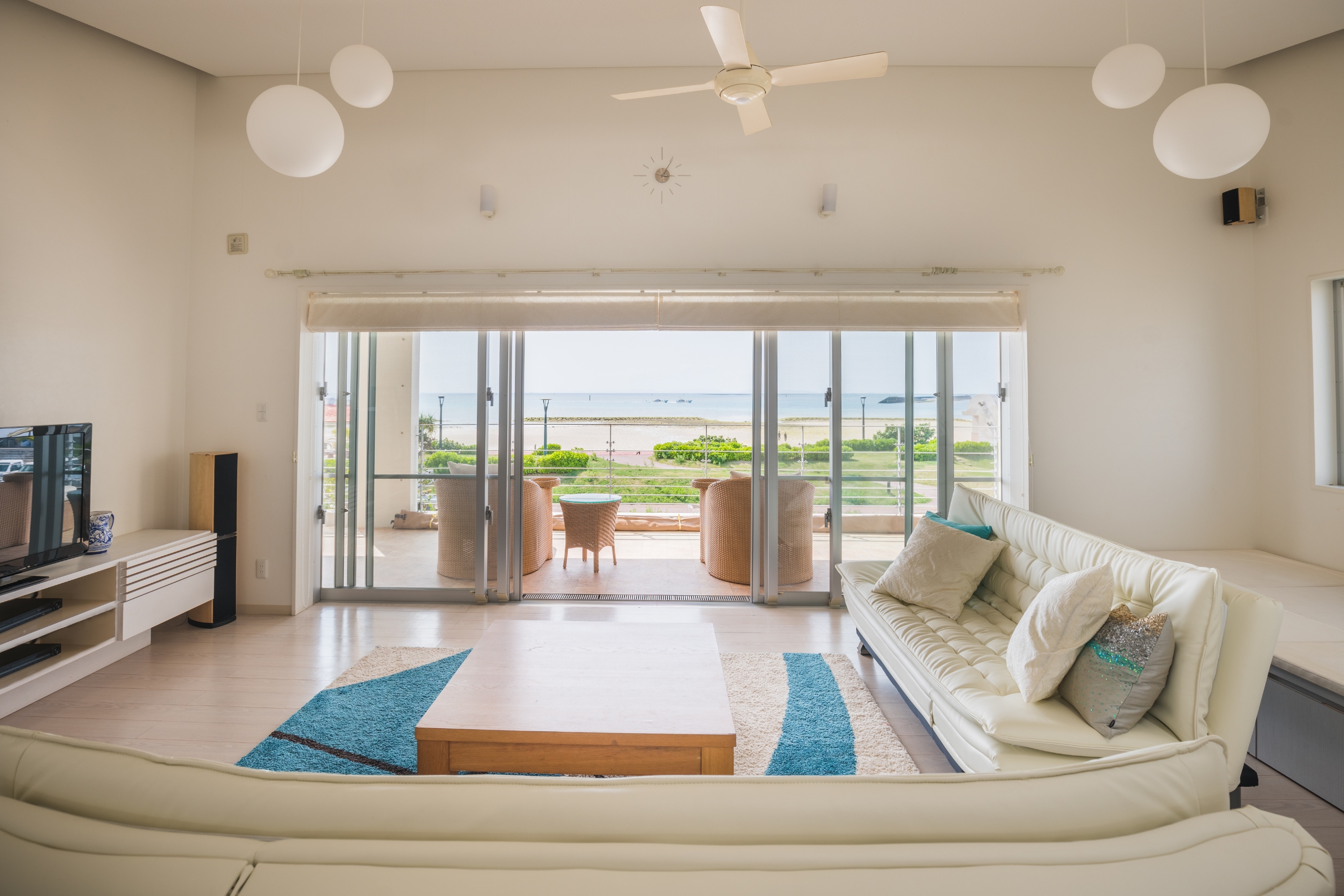
Large sliding or folding glass door systems — whose fully open configuration removes the physical and visual barrier between interior and exterior entirely and whose partial opening in different configurations allows the house to respond to different conditions of sun, rain, and wind with the flexibility that variable tropical weather demands — are the primary architectural tool for achieving the indoor-outdoor connection that tropical beach house design aspires to. The quality of these door systems — the smoothness of their operation, the slimness of the framing that maximises the view when closed and minimises the visual interruption when open, and the weather sealing whose integrity determines the system’s performance during the heavy rain events that tropical coastal locations periodically experience — is worth significant investment, because the daily pleasure of a door system that operates effortlessly and whose performance in all conditions is reliable is one of the most consistently appreciated qualities of a well-built tropical beach house.
Covered outdoor living spaces — the verandas, terraces, and covered decks that extend the usable living area of the house into the outdoor environment while providing the shade and weather protection that makes extended outdoor occupation genuinely comfortable rather than aspirationally pleasant — are the spatial element whose generosity most directly determines the quality of outdoor living the house provides. A tropical beach house whose covered outdoor living space is large enough to accommodate the dining, relaxing, and social activities that its occupants want to conduct outside — with the proportionality between covered outdoor and enclosed indoor space that reflects the reality that tropical coastal life is lived predominantly outdoors during the comfortable hours of the day — is a house whose domestic geography is genuinely aligned with the experience of tropical coastal living rather than merely equipped with a token outdoor area whose scale is inadequate to the life the setting invites. For the home and garden that occupies a tropical coastal setting, this generosity of covered outdoor provision represents one of the most important and most rewarding investments available in the entire design programme.
Furniture, Textiles, and the Layered Details That Create Genuine Comfort
The furniture, textiles, and decorative details that populate a tropical beach house are the layer of the design whose daily interaction with the people who live in the space most directly determines whether it feels genuinely welcoming and genuinely comfortable or merely visually attractive without the tactile warmth and personal character that distinguish a house that has been truly made into a home. The selection of these elements — guided by the same principles of material honesty, environmental appropriateness, and the celebration of natural beauty that should govern every dimension of tropical beach house design — creates the specific character of the interior that makes it feel lived-in, cared for, and genuinely reflective of the lives and personalities of its occupants rather than a generic interpretation of a coastal lifestyle aesthetic that could belong to anyone.
Natural fibre furniture — rattan, wicker, seagrass, bamboo, and woven palm — is the most characteristically tropical of all furniture material categories and the one whose combination of lightness, breathability, and organic beauty makes it most genuinely appropriate for the warm, informal, indoor-outdoor domestic environment of a coastal tropical home. The quality of natural fibre furniture varies enormously between the cheapest mass-produced items whose construction deteriorates rapidly in humid coastal conditions and the finest handcrafted pieces whose quality of weave, structural integrity, and material selection reflects generations of traditional craft knowledge whose results are both practically durable and aesthetically exceptional. Investing in genuinely well-made natural fibre seating, supplemented with the kind of deep, generously cushioned upholstery whose comfort invites extended relaxation in the tropical home’s most important social spaces, creates the particular combination of lightness and comfort that is the defining quality of the best tropical beach house interiors.
Textiles contribute the softness, the colour, and the tactile comfort that balance the hardness of timber, stone, and ceramic in a tropical interior, and their selection and layering is the detail work whose cumulative effect on the overall warmth and character of the space is genuinely significant. Natural fibres — linen, cotton, and handwoven textiles in natural dyes — whose breathability and easy washing make them practically appropriate for a beach house where sandy feet and salty skin are the daily domestic reality, provide the textile foundation that supports both comfort and easy maintenance. Cushion covers, throws, and rugs in the coastal palette of sea blues, sandy neutrals, and the warm coral and green accents of the tropical natural world add the colour and personality that transform a well-proportioned tropical interior from architecturally interesting to genuinely inviting — the specific quality of welcome that makes a house feel not just beautiful but genuinely and specifically theirs to whoever is fortunate enough to inhabit it.
Conclusion
Designing a tropical beach house that genuinely realises the extraordinary potential of its coastal setting is one of the most rewarding residential design projects available to any homeowner whose circumstances allow them to engage with it — a creative and practical challenge whose successful resolution produces a domestic environment whose daily experience is as remarkable and as genuinely pleasurable as the natural setting it inhabits and celebrates. The passive climate management strategies that keep the house naturally comfortable in tropical heat, the material palette that draws authentically from the coastal natural world, the colour decisions that bring the beach’s extraordinary natural palette indoors, the indoor-outdoor spatial organisation that makes seamless connection between house and beach the defining characteristic of daily life, and the furniture, textiles, and layered details that create genuine comfort and genuine personal character — these are the design dimensions whose thoughtful integration produces the tropical beach house that feels not like a holiday rental interpretation of coastal living but like a genuine, specific, and deeply personal home whose relationship with one of the world’s most beautiful natural environments is as intimate, as intelligent, and as enduringly satisfying as any home and garden can aspire to be.