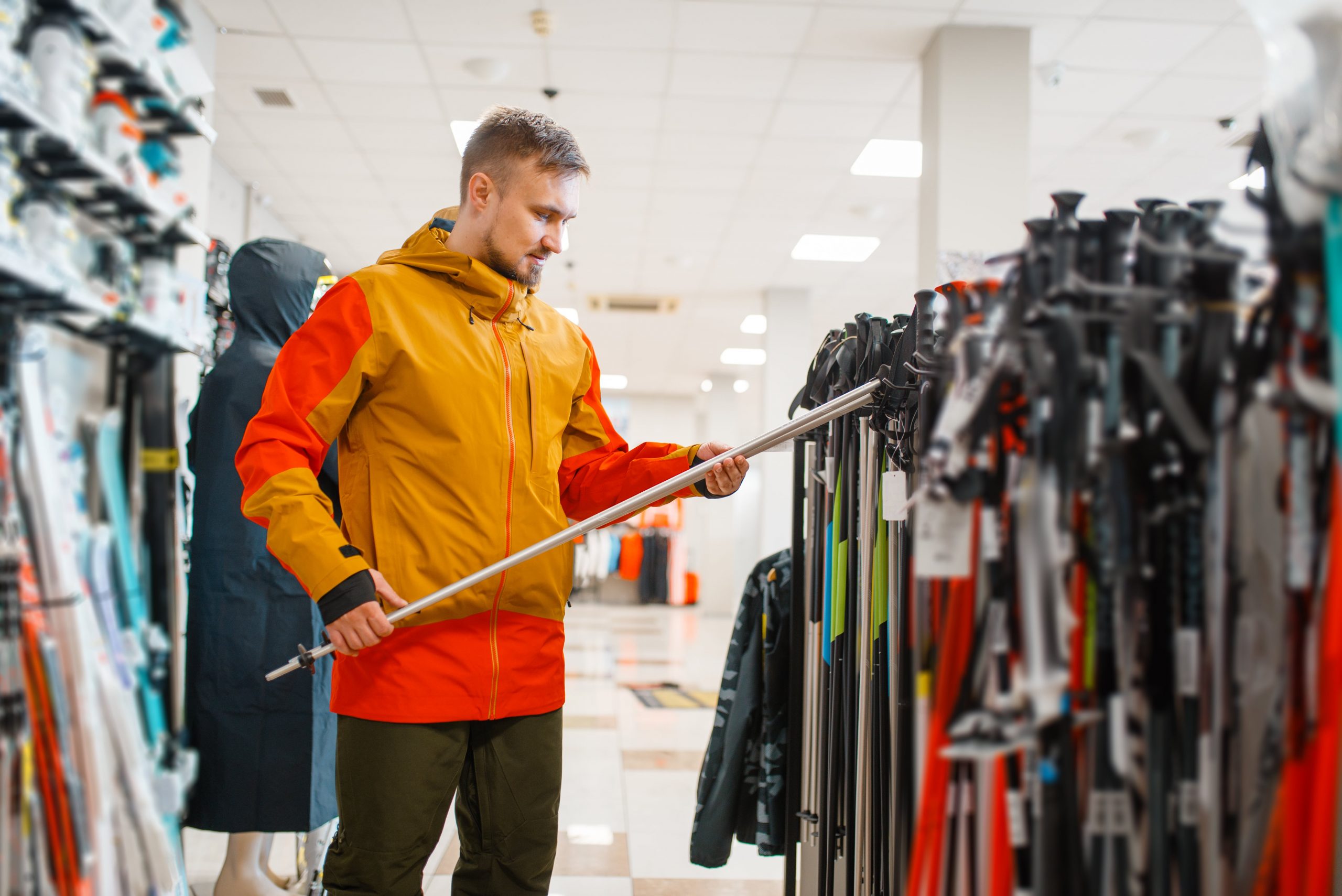
The sports equipment market is one of the most consistently robust and genuinely exciting retail sectors available to aspiring entrepreneurs — a market driven by the enduring human enthusiasm for physical activity, the continuous innovation of sports product manufacturers whose new releases generate genuine consumer demand, and the growing participation in recreational sport across virtually every age group and demographic. For anyone who combines a genuine passion for sport with commercial ambition, the prospect of building a business around selling sports equipment is one of the most personally fulfilling and commercially viable entrepreneurial paths available. But like any retail venture, starting a sports equipment business requires considerably more than enthusiasm for the product category — it demands clear market positioning, careful supplier selection, disciplined inventory management, a well-designed customer acquisition strategy, and the operational systems that allow a business to serve its customers well and scale its operations efficiently as demand grows. Whether the vision is a specialist online retailer focused on a single sport, a physical shop serving a local sporting community, or a hybrid model that combines both channels, the foundational decisions made at the start of the business have consequences that compound over time — making the investment in thorough, rigorous planning one of the most valuable things any aspiring sports equipment retailer can undertake before they place their first stock order.
Finding Your Niche: The Most Important Decision in Sports Equipment Retail
The single most commercially consequential decision in starting a sports equipment business is defining the niche — the specific sport, the specific category within a sport, or the specific customer segment — that the business will focus on with the depth and expertise that creates genuine competitive differentiation from the established general sporting goods retailers and large e-commerce platforms that dominate the broadest parts of the market. Attempting to compete against the likes of Sports Direct, Decathlon, or Amazon across the full breadth of sports equipment is a business model whose resource requirements and competitive disadvantages make it entirely unsuitable for a start-up operation, regardless of how well-capitalised or how experienced the founder. The opportunity for a new sports equipment business lies not in breadth but in depth — in serving a specific sporting community with a level of product knowledge, product curation, and customer experience that the generalist retailers simply cannot replicate.
A specialist climbing equipment retailer whose founder is an experienced climber with deep knowledge of gear performance across different disciplines — sport climbing, trad climbing, bouldering, alpine climbing — provides prospective customers with something that no general sporting goods retailer can match: the confident recommendation of someone who has used the products in the conditions they are being bought for and who understands the specific requirements of different climbing styles and ability levels with genuine precision. This depth of expertise is the specialist retailer’s primary competitive weapon, and its translation into confident, knowledgeable customer service — whether in a physical shop, through detailed online product descriptions, or through the kind of advisory content that builds organic search visibility and customer trust simultaneously — is what makes the specialist model commercially viable even in a market where price competition from larger competitors is constant and relentless.
The niche selection process should be informed by an honest assessment of several converging factors — the founder’s genuine passion for and knowledge of the sport in question, the commercial size and growth trajectory of the market segment, the current competitive landscape and the degree to which existing specialist retailers have already claimed the available market share, the supply chain accessibility of the products needed to serve the niche, and the average transaction value and repeat purchase frequency of the customer segment whose characteristics together determine the revenue potential of the chosen market. A niche that is personally compelling, commercially viable, currently underserved by genuinely specialist retailers, and accessible through realistic supplier relationships represents the intersection of passion and opportunity that gives a new sports equipment business its best possible commercial foundation.
Sourcing Products: Building Supplier Relationships That Define the Business
The quality, breadth, and commercial terms of the supplier relationships a sports equipment business establishes are as fundamental to its commercial success as any customer-facing dimension of the operation. The products a retailer can offer, the prices at which they can sell them profitably, the speed with which they can fulfil orders, and the exclusivity or distinctiveness of their range relative to competitors are all directly determined by the quality of their supplier relationships — making the investment of time and effort in identifying, approaching, and developing the right supplier partnerships one of the most important operational priorities of any sports equipment business establishment.
The primary route to sports equipment supplier relationships is through direct contact with brand manufacturers and their authorised distributors — the wholesale partners through which many brands distribute their products to independent retailers rather than selling direct. Most established sports equipment brands maintain lists of their authorised UK distributors whose contact details are either publicly available or obtainable through a direct approach to the brand’s trade sales team, and establishing contact with the relevant distributor for each priority brand is the practical starting point for the supplier development process. The commercial terms available to a new retailer will initially reflect the reality of their unproven status as a trading partner — minimum order quantities, payment terms, and trade discount levels that may not be as favourable as those available to established retailers with proven sales volumes and longer relationship histories — but these terms improve as the relationship develops and the retailer demonstrates consistent sales performance and reliable payment practices.
Trade shows — including the annual Sports Trader UK show and the international ISPO trade fair whose UK representation covers the most significant global sports equipment brands — provide the most efficient available forum for meeting multiple potential suppliers in a single event, reviewing product ranges, comparing terms, and establishing the personal relationships whose development is one of the most important factors in obtaining favourable commercial terms and ongoing supplier support. Attending the relevant trade show for the chosen niche as early as possible in the business planning process — even before placing any orders — allows a founder to map the supplier landscape comprehensively, identify the specific brands and distributors whose product quality and commercial terms most closely align with the business’s positioning and financial model, and begin building the supplier relationships whose quality will partly define the business’s competitive position in the market it enters.
Setting Up Your Sales Channels: Online, Physical, or Both
The decision about which sales channels to operate through — an online store, a physical retail location, marketplace platforms such as Amazon and eBay, or some combination of all of these — is one of the most practically significant structural decisions in establishing a sports equipment business, because each channel carries different cost structures, different operational requirements, different customer acquisition dynamics, and different margin characteristics whose combined implications for the business’s financial model deserve careful analysis before any infrastructure investment is committed.
An online-first sports equipment business — whose primary sales channel is a directly owned e-commerce website supplemented by carefully selected marketplace listings — offers the lowest initial capital requirement of any established retail model, the broadest geographic reach for a given marketing investment, and the operational flexibility of a business that is not tied to the fixed costs of a physical location. The e-commerce platform whose selection establishes the technical foundation of an online sports equipment business should balance ease of management with the feature capability and scalability needed to support the business’s growth ambitions — Shopify is the most widely used platform among independent sports equipment retailers for its combination of accessible setup, comprehensive app ecosystem, and proven ability to scale from first sales to substantial revenue without requiring platform migration. The primary operational challenge of an online-first sports equipment business is customer acquisition — the investment in search engine optimisation, paid search advertising, social media content, and the email marketing infrastructure that together drive the consistent flow of relevant traffic whose conversion rate determines the business’s revenue trajectory.
A physical retail location offers the specialist sports equipment retailer its most powerful competitive weapon — the in-person customer experience whose quality creates the kind of loyalty and word-of-mouth advocacy that online advertising cannot purchase at any price. The specialist shop whose staff genuinely know their products, whose fitting services, gait analysis, bike fitting, or equipment customisation capabilities add genuine value to the purchase experience, and whose physical presence in a sporting community creates the kind of anchor role that makes it the natural first call for every participant in its target sport within the local catchment area, has a customer relationship depth that online-only competitors cannot replicate. The higher fixed costs of physical retail — lease commitments, fit-out investment, staffing, and the operational complexity of managing a walk-in customer environment — are the trade-off for this relationship depth, and the decision to establish a physical location should be made only when the market research supports the conclusion that sufficient customer demand exists within the catchment area to generate the revenue needed to cover those fixed costs and justify the capital investment required.
Inventory Management and Financial Planning for Sports Equipment Retail
Sports equipment retail presents specific and genuinely challenging inventory management requirements whose complexity reflects several characteristics of the product category — the seasonality of demand across different sports whose peak participation seasons create predictable but significant fluctuations in sales volumes, the breadth of sizing and variant requirements across product categories including clothing, footwear, and size-dependent hard goods, the short product lifecycle of technical equipment categories where annual model updates can rapidly make previous season stock obsolete, and the capital intensity of maintaining sufficient stock depth across a product range wide enough to serve customers without the out-of-stock situations that destroy both sales opportunities and customer loyalty.
The financial planning for a sports equipment business must model these inventory dynamics with sufficient accuracy to ensure that the business maintains adequate working capital to fund stock purchases without over-committing to inventory positions whose carrying cost and obsolescence risk exceed the margin generated by their eventual sale. The cash flow characteristics of retail businesses — in which cash is deployed in stock purchases weeks or months before it is recovered through sales — make working capital management one of the most critical ongoing financial disciplines for any sports equipment retailer, and the founders who understand this dynamic from the outset and plan for it explicitly in their financial model are those who avoid the cash flow crises that catch under-capitalised retail start-ups unprepared at the seasonal inventory build points that every sports equipment business encounters.
Pricing strategy in sports equipment retail requires the careful balancing of margin generation, competitive positioning, and customer value perception across a product range whose different categories carry very different price sensitivity profiles. Premium technical equipment — the high-performance bike components, the specialist climbing hardware, the elite running shoes — is often less price-sensitive among its target purchasers than entry-level equipment whose buyers are making their first purchases in a sport and whose primary decision criterion is frequently price rather than performance specification. Understanding the price sensitivity profile of each product category within the range, and setting prices that reflect both the margin requirements of a sustainable business and finance operation and the competitive reality of the market in which the products are offered, is the pricing intelligence that distinguishes profitable sports equipment retailers from those whose enthusiasm for the product category is not matched by the commercial rigour needed to build a business that generates adequate returns on the capital and effort invested in it.
Marketing and Building a Loyal Sports Equipment Customer Base
The marketing of a sports equipment business is most effective when it operates simultaneously on two levels — the broad-reach activities that create awareness and attract new customers, and the community-building activities that transform one-time buyers into loyal advocates whose repeat purchases, referrals, and genuine enthusiasm for the business provide the most sustainable and most cost-efficient customer acquisition available at any stage of a retail business’s development. The balance between these two marketing dimensions should shift progressively toward community-building as the customer base grows — the early-stage business with no existing customers must invest primarily in awareness, but the established business whose customer base is large enough to generate meaningful referral and repeat purchase revenue has a powerful reason to invest in the retention and advocacy of those existing customers rather than simply continuing to acquire new ones at the cost of paid marketing.
Content marketing — the creation and distribution of genuinely useful, genuinely expert content about the sport, the equipment, and the community — is the most organically powerful marketing approach available to a specialist sports equipment retailer whose depth of knowledge gives it a credible voice in the conversations that sporting enthusiasts are actively seeking to engage with. A specialist cycling retailer that produces a YouTube channel covering bike maintenance, product reviews, route guides, and training advice whose quality reflects genuine cycling expertise is creating a marketing asset that attracts exactly the kind of engaged, passionate prospective customer whose lifetime value to the business is highest, and doing so through the kind of genuine value provision whose appeal does not diminish with audience familiarity the way paid advertising’s effectiveness typically does. The sports equipment retailer who becomes the most trusted and most informative voice in their specific sporting community online has built a marketing platform whose commercial return compounds over time as the audience grows, as the content library deepens, and as the brand association between the retailer and the sport it serves strengthens with each successive piece of genuinely excellent content.
Local sporting community engagement — sponsoring club events, partnering with local sports clubs for equipment discounts, supporting junior development programmes, and being a visible and actively contributing presence in the sporting community the business serves — builds the kind of grassroots loyalty and word-of-mouth advocacy that no amount of digital advertising can replicate for a sports equipment business whose target customers are concentrated in a specific geographic area or a specific sporting community. The sports equipment retailer who is known and respected in their local sporting community as a genuine supporter of the sport — not merely a commercial operator extracting value from it — is the retailer whose customers return season after season, recommend to every new participant who asks where to buy equipment, and whose loyalty provides the business with the commercial stability and the community meaning that make sports equipment retail one of the most genuinely satisfying entrepreneurial choices available to founders who want to build something that matters beyond its bottom line.
Conclusion
Starting a sports equipment business is a genuinely exciting and genuinely achievable entrepreneurial ambition for founders who approach it with the combination of sporting passion, commercial rigour, and operational patience that building any retail business from the ground up requires. The niche positioning that creates competitive differentiation, the supplier relationships that define what can be offered and at what margin, the sales channel infrastructure that reaches the right customers efficiently, the inventory and financial management that keeps the business solvent through the seasonal and cyclical demands of sports retail, and the marketing and community engagement that builds the loyal customer base whose repeat purchases and referrals sustain long-term growth — each of these dimensions of sports equipment retail rewards genuine investment of thought, planning, and consistent execution. The founders who get these foundational decisions right, who build their businesses on the honest assessment of market opportunity and their own genuine capability rather than optimistic assumptions and enthusiastic intuition alone, are the ones who build sports equipment businesses that grow, that serve their communities with genuine excellence, and that deliver the commercial and personal rewards that motivated their founders to start in the first place.